Build beyond the demonstration.
Developing perception, locomotion, and manipulation experiments.
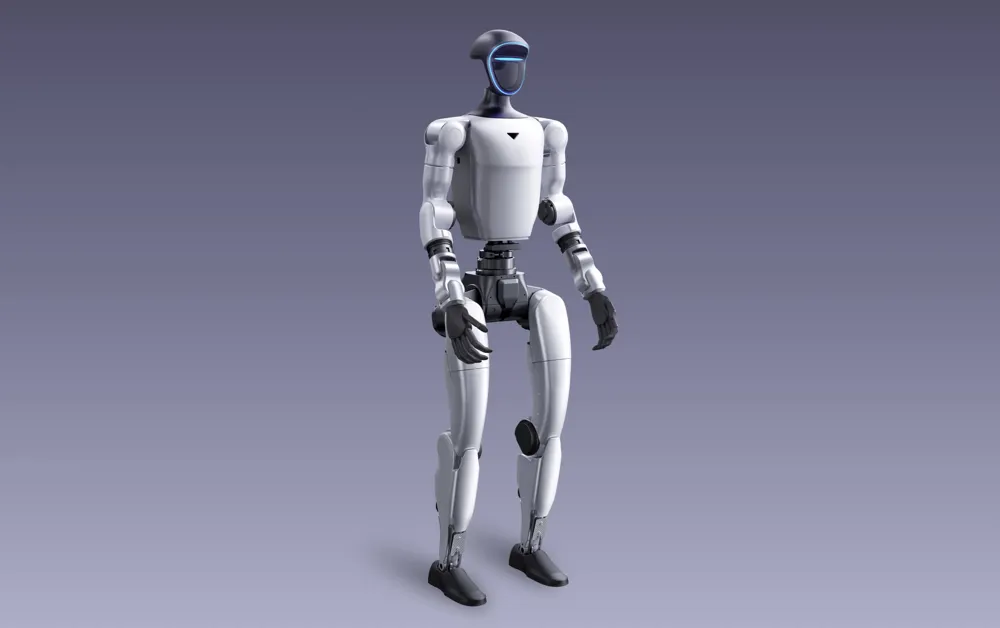
Where would the help actually help?
If you are among robotics laboratories and development teams, start here: developing perception, locomotion, and manipulation experiments. Pick one familiar routine. What is the annoying part, who handles it today, and what would a better day look like? A clear answer gives your robot search a much better starting point.
Bring your world to the demo.
Pay particular attention to sdk terms, control access, compute, sensors, test space, and reproducibility. A tidy demonstration space may feel very different from your own place. Ask to see the messy moments too: the interruption, the obstacle, and the person who helps the robot start again.
Three things worth seeing.
- The required control loop and API
- Payload and compute integration
- Fall recovery and test isolation
Count the little wins.
Reproducible runs
Engineering hours per experiment
Compare the baseline with pilot results, including human assistance, failed cycles, consumables, and service time.
Your next rabbit hole.
These manufacturer profiles are research starting points. Product fit, configuration, regional availability, and support for your specific task must be confirmed directly.
Put your ideas in one place.
Save this application in this browser, add private planning notes, and download your shortlist as a JSON file. Nothing is submitted or dispatched.
Open my plannerA few more good questions.
While you’re curious…
Look below the surface with a plan.
Scoping specialist underwater observation and inspection.
Take a look around ↗commercial / Aerospace & precision industriesBuild confidence into each operation.
Evaluating traceable assembly, handling, and inspection automation.
Take a look around ↗commercial / Recycling & waste operationsA cleaner process starts with the right stream.
Scoping specialist sorting and repetitive material handling.
Take a look around ↗